
Supreme Court Overrules the Fourth Circuit and Defines the Burden for Employers to Prove Employees’ Exemption from Overtime
On Jan. 15, the Supreme Court unanimously reversed the Fourth Circuit Court of Appeals and held that employers claiming exemptions for their employees from the Fair Labor Standards Act's requirements only need to prove the exemption by the “default” preponderance-of-the-evidence standard, rather than any heightened pleading requirement.
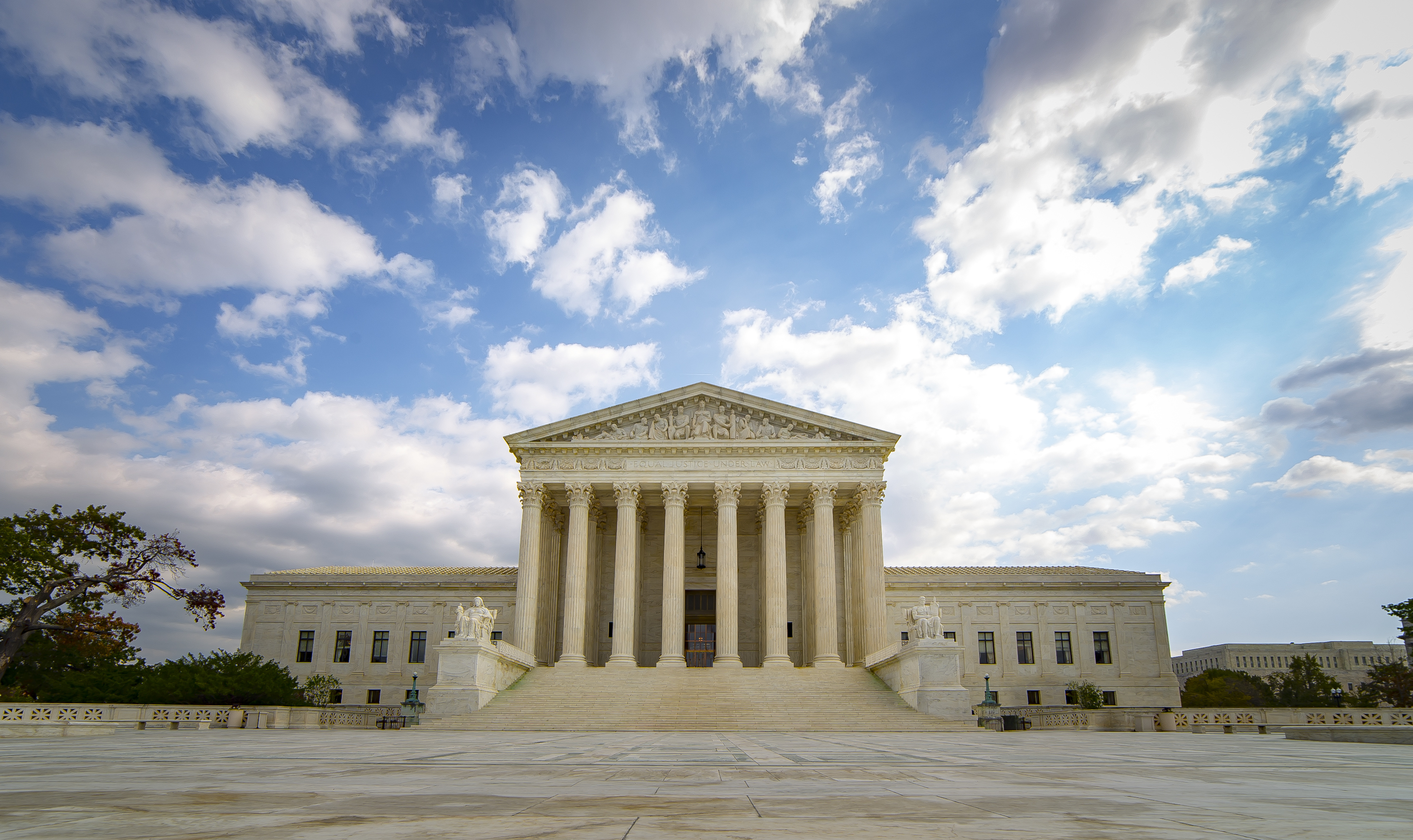
Fort Lauderdale, Fla. (January 16, 2025) - The Fair Labor Standards Act of 1938 guarantees workers who are covered by the law a federal minimum wage and requires overtime pay when a covered employee works more than 40 hours per week. See 29 U. S. C. §206 and 207. But not every employee is entitled to these protections because Congress saw fit to exempt certain types of employees from receiving overtime and, in some instances, both minimum wage and overtime. See 29 U. S. C. §207 and 213. Understandably, employers and employees frequently disagree about whether an employee is exempt from receiving overtime. Once an employee files a lawsuit claiming they were denied minimum wage and/or overtime, it is up to the employer to both assert the exemption and to prove it applies. So, if the employer wants to prove to the Court or to the jury they were correct in exempting an employee, what evidentiary standard do they need to meet?
Yesterday, the United States Supreme Court definitively answered that question. In E.M.D. Sales, Inc. v. Carrera, EMD, an international food products distributor, classified some of its sales representatives as exempt from overtime. Both sides agreed that those employees did work over 40 hours per week and that they weren’t paid overtime; the parties only disagreed as to whether those employees should have been paid overtime. The lower court held EMD to a high evidentiary standard—“clear and convincing” evidence—to prove that its employees were properly exempt, and the Fourth Circuit Court of Appeals agreed.
The Supreme Court unanimously reversed the Fourth Circuit, holding that employers claiming exemptions for their employees only need to prove the exemption by the “default” preponderance-of-the-evidence standard, rather than any heightened pleading requirement. Writing for the unanimous Court, Justice Kavanaugh explained that nothing in either the text of the FLSA or the Constitution required any higher standard of proof. As Justice Kavanaugh analogized, since clear and convincing evidence is not required in Title VII cases, where employees may seek to protect their civil rights, “it is hard to see why it would be required in Fair Labor Standards Act cases.”
Although the Fourth Circuit was an outlier in applying the clear and convincing standard, this latest decision affirms and continues a management-friendly trend in FLSA-exemption case law and precedent. As an example, in Encino Motorcars, LLC v. Navarro, 584 U.S. 79, 88-89 (2018), the Supreme Court expanded a judge’s authority to interpret FLSA exemptions, holding that the FLSA only requires a “fair” reading of its exemptions, rather than a “narrow” one, and reasoning that the FLSA’s exemptions were “as much a part of the FLSA's purpose as the overtime-pay requirement.”
If employers find themselves defending their decision to exempt certain employees from overtime, or if they need help deciding whether it would be proper to classify employees as exempt under the FLSA, the experienced employment attorneys at Lewis Brisbois are ready to assist you with your litigation defense needs.
Visit our Labor & Employment Practice page to learn more about our capabilities in this area.
Author:
Alex B.C. Ershock, Partner