
2024 Minnesota Labor & Employment Year End Review
There have been several major developments in Minnesota employment law resulting from yet another eventful legislative session in 2024.
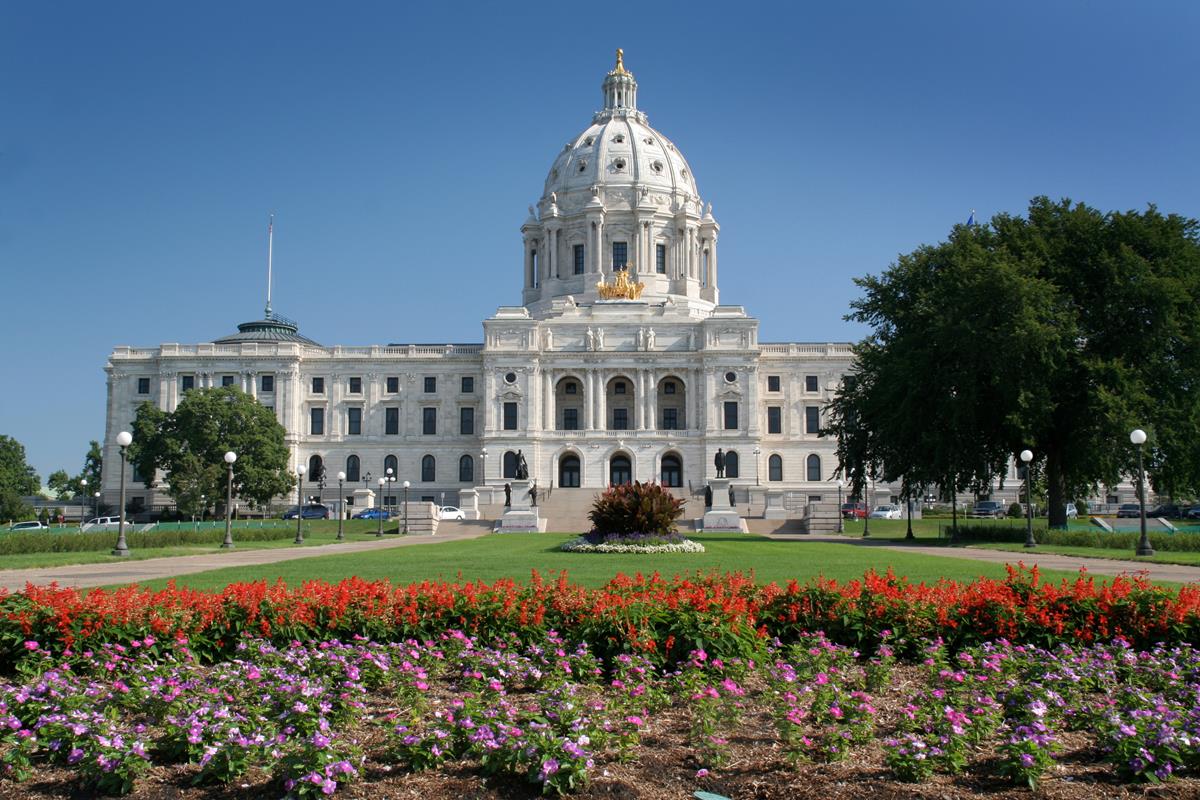
Minneapolis, Minn. (January 23, 2025) - There have been several major developments in Minnesota employment law resulting from yet another eventful legislative session in 2024.
Amendments to the Minnesota Human Rights Act
On May 15, 2024, Minnesota Governor Tim Walz signed a bill (HF 4109 / SF 4201) into law significantly amending the Minnesota Human Rights Act (“MHRA”) (effective August 1, 2024):
- Plaintiffs’ Potential Damages Have Dramatically Increased: The amendment removed the MHRA’s $25,000 cap on punitive damages for private employers. Additionally, damages for mental anguish and suffering are now expressly included in “compensatory damages” for the purposes of the MHRA’s damages multiplier (or “trebling”) provision. Juries will determine the amount of all damages to be awarded a prevailing plaintiff, including compensatory, treble, and punitive damages. Civil penalties and attorneys’ fees are determined by the court. Also, the procedural requirements of Minn. Stat. § 549.20 now apply to claims for punitive damages under the MHRA.
- The Deadline for Plaintiffs to File Suit Has Been Enlarged: Decisions on administrative charges before the Minnesota Department of Human Rights (“MDHR”) have been accelerated. The MDHR must now make a determination of probable cause or no probable cause within one year of the filing of a claimant’s administrative charge. This one-year period is tolled under certain circumstances, for instance, during the period in which the parties are participating in the alternative dispute resolution process. The MDHR also is now required to offer alternative dispute resolution as an option.
A claimant also now has 90 days to file a lawsuit after the MDHR dismisses an administrative charge. Pre-amendment, a claimant had 45 days to file a lawsuit.
- Important Definitions Under the MHRA Have Been Expanded: First, employers are now explicitly prohibited from discriminating against a person based on one or more of the protected classes identified in the MHRA.
Second, the definition of “discriminate” now includes harassment based on any protected characteristic, instead of only sexual harassment.
Third, the definition of “disability” has been expanded to include any person who has an impairment that is episodic or in remission but would materially limit a major life activity when active. Previously, the definition only covered a person who has a physical, sensory, or mental impairment that materially limits one or more major life activities, is regarded as or has a record of such an impairment.
Finally, “familial status” has been expanded to include caretakers generally rather than only caretakers of minors.
The Labor and Industry Policy Omnibus Bill
On May 17, 2024, Governor Walz’s signature of the Labor and Industry Policy Omnibus Bill (SF 3852 / HF 3947) made a number of other changes to Minnesota employment law, including:
New Pay Transparency Requirements
Beginning on January 1, 2025, employers with 30 or more employees in Minnesota must include a good faith estimate of a starting salary range or fixed rate in each job posting, and must also include a general description of all benefits and other compensation to be offered if a job applicant is hired. The included salary range may not be open ended, for example, a posting that states pay is “starting at $20/hour” is not sufficient.
Pregnancy Accommodation Amendment
As of August 1, 2024, employers must maintain insurance benefits for employees (and their dependents) on pregnancy leave under Minn. Stat. § 181.939. Employees must continue to pay their share of the cost of those benefits.
Amendments to the Drug and Alcohol Testing in the Workplace Act (“DATWA”)
Also beginning on August 1, 2024, employers may use “oral fluid testing,” i.e., a saliva test, as an alternative method for testing employees or prospective employees for drugs, cannabis, or alcohol. When an employer is permitted to test an employee or applicant, and DATWA’s notice and re-testing provisions, remain unchanged.
The 2024 Tax Omnibus Bill
On May 24, 2024, Governor Walz signed into law a tax omnibus bill (HF 5247 / SF 5234) (the “Tax Omnibus Bill”), which amended still other employment laws in Minnesota.
Amendments to the Minnesota Earned Sick and Safe Time Law
Effective January 1, 2024, the Minnesota earned sick and safe time law (“ESST Act”) required employers to provide paid leave to employees under certain circumstances. The Tax Omnibus Bill amended the ESST Act in several important ways:
- New Penalties for Noncompliance: After the 2024 amendments, an employer who does not allow an employee’s use of earned sick and safe time leave is liable for a monetary amount equal to the leave time the employee was not provided or not allowed to use, plus an additional equal amount as liquidated damages. If an employer fails to keep records sufficient to determine the amount ESST leave an employee should have received, the employer is liable for an amount equal to 48 hours of leave for each year leave was not provided, plus an additional equal amount as liquidated damages.
- Expanded Definition of “Employee”: Previously, the ESST Act applied to employees who performed at least 80 hours of work per year for an employer in Minnesota. Post-amendment, the ESST Act applies to employees who the employer anticipates will perform at least 80 hours of work per year for the employer in Minnesota.
- Changes to Pay Rate Calculation and Increments of Leave: The ESST Act now requires an employer to pay an employee at the same “base rate” as the employee earns from the employer, as opposed to paying the employee at the same “hourly rate.” An employee’s “base rate” depends on whether the employee is paid on an hourly basis (and, if so, whether they are paid multiple hourly rates), a salary basis, or a commission or piecework basis.
Also, an employee can now use ESST leave in the same increment of time for which the employee is paid, although an employer is not required to provide leave in increments of less than 15 minutes and cannot require the use of leave in increments of more than four hours.
- Changes to Required Statements to Employees: Employers may now use a “reasonable system” to provide employees with information on the employees’ total earned sick and safe time leave at the end of each pay period. Prior to the 2024 amendments, employers were required to provide this information to employees on the employees’ pay statements.
Amendments to Minnesota’s Paid Leave Law
The Minnesota Paid Leave Law (“PLL”) was initially passed in 2023 and takes effect on January 1, 2026, creating a state-run family and medical leave program for eligible employees, funded via payroll taxes. The Tax Omnibus Bill amended the PLL prior to its effective date by, among other things:
- Increasing the payroll tax rate from .7 percent to .88 percent.
- Adding or changing a number of defined terms, such as “benefit year,” “initial paid week,” and “financially eligible.”
- Allowing an authorized representative to apply for leave on an employees’ behalf.
- Allowing independent contractors and the self-employed to opt into coverage.
- Requiring employers to grant leave in minimum one-day increments.
The amendments also clarify that if an employer provides an employee with wage replacement during leave and the employee also receives benefits under the PLL, and if those combined amounts exceed the employee’s usual pay, the employee must refund the difference. As amended, the PLL also will provide for potentially lower payroll tax rates for small employers (i.e., employers with 30 or fewer employees).
Increased Penalties for Employee Misclassification
Effective July 1, 2024, Minnesota employers who improperly fail to classify, represent, or treat a worker as an employee are now liable for up to $10,000 for each such violation, in addition to compensatory damages owed to the individual. An employer’s officers, owners, members, or agents who knowingly or repeatedly engage in misclassifying employees now also may be personally liable for that conduct. Additionally, employers in the construction industry must meet a 14-point test to show that an independent contractor has been properly classified as such rather than as an employee.
Changes to Personnel Record Review and Access
As of May 24, 2024, Minnesota’s personnel record review and access law (Minn. Stat. § 181.960) applies to any employer who employs at least one person in the state. Previously, that law only applied to employers with 20 or more employees in Minnesota.
For more information on these developments, contact the author or editor of this alert. Visit our Labor & Employment Practice page for additional alerts in this area.
Author:
Mack Reed, Partner
Editor:
Mary Smigielski, Partner and Midwest Regional Vice Chair of Labor & Employment Practice