
2024 New York Labor & Employment Year End Review
In keeping with previous years, 2024 brought many changes in labor and employment law in the Empire State, with a series of new laws, agency actions, and judicial decisions. Here, we detail the most significant developments.
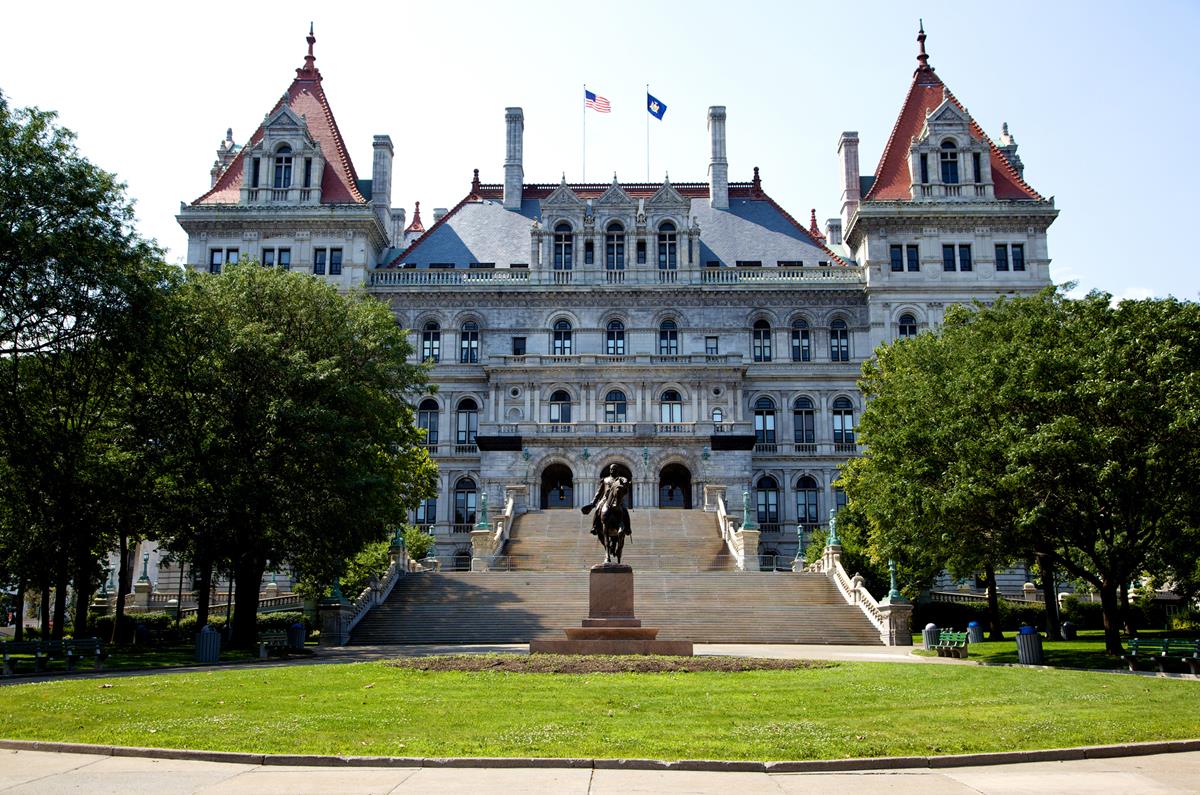
New York, N.Y. (January 29, 2025) - In keeping with previous years, 2024 brought many changes in labor and employment law in the Empire State, with a series of new laws, agency actions, and judicial decisions. Here, we detail the most significant developments.
Expansion of Employee Rights and Protections in New York State
Protections for Nursing Mothers. Previously, the New York State Nursing Mothers in the Workplace Act required employers to provide reasonable unpaid break time to nursing mothers, or to permit nursing mothers to use paid break or meal time each day to express milk, for up to three years following childbirth. A new amendment effective June 19, 2024 requires that employers provide 30 minutes of paid break time for nursing mothers to express breast milk every day, as opposed to unpaid time. The New York State Department of Labor issued revised materials concerning the Act, including an updated model policy, which can be found here.
Prenatal Leave. Effective January 1, 2025, New York employers must provide pregnant employees with 20 hours of paid prenatal leave per 52-week period. This leave, which is in addition to existing Paid Sick and Safe Leave, covers time spent receiving health care, including physical examinations, monitoring, testing, and medical procedures. Additionally, employers are prohibited from conditioning leave on employees disclosing confidential health information, and they must guarantee employment upon employees' return from leave. The State published this FAQ.
Freelancer Protections. New York's "Freelance Isn't Free Act," signed into law in 2023, finally took effect in August 2024. The Act provides new protections for freelancers, defined as any natural person or organization composed of no more than one natural person who provides services in exchange for at least $800. It is now mandatory to execute a written contract between a hiring party and a freelancer, which must include: (a) the name and mailing address of both the hiring party and the freelancer; (b) an itemization of all services to be provided by the freelancer, the value of the services to be provided pursuant to the contract, and the rate and method of compensation; (c) the date on which the hiring party must pay the contracted compensation or the mechanism by which such date will be determined; and (d) the date by which a freelancer must submit a list of services rendered under such contract to the hiring party. The Department of Labor has developed a model contract that can be used to meet the requirements. The Act enables freelancers to file complaints with the New York State Attorney General.
Retail Workers. The Retail Worker Safety Act – which becomes effective March 3, 2025 – requires retail businesses with at least ten employees to implement workplace violence prevention requirements for their retail employees. Employers must adopt written workplace violence prevention policies addressing risk factors, prevention methods, and include an anti-retaliation statement protecting employees who complain about such safety issues. Additionally, covered employers must either adopt a training program issued by the State Department of Labor or create their own program that exceeds those standards. Finally, effective in 2027, employers with at least 500 retail workers will be required to install panic buttons, which automatically contact 911, throughout their workplaces.
Paid Family Leave Law Amendments. The New York Paid Family Leave Law (“PFL”) provides employees up to 12 weeks of partially paid leave in a 52-week period for reasons including caring for a family member with a serious health condition, bonding with a new child following birth, adoption or placement, or reasons related to a family member being deployed on active military service. The State Department of Financial Services announced changes to the employee contribution rate and benefit amounts under the PFL effective January 1, 2025. Going forward, the contribution rate will be 0.388% of an employee's gross wages per pay period, with a maximum annual contribution of $354.53 and a maximum weekly benefit amount of $1,177.32 per week.
Clean Slate Act. Effective November 16, 2024, New York State employers must comply with the Clean Slate Act, which mandates the sealing of certain New York State convictions, including most misdemeanor and felony convictions, other than sex offenses, sexually violent offenses, and non-drug-related Class A felonies. Records from such infractions will be sealed within three years after release from prison or from the imposition of sentence for misdemeanors, or within eight years from release or imposition of sentence for felonies. Accordingly, employers that conduct criminal background searches will no longer have access to sealed convictions, with limited exceptions. The Act amends the New York State Human Rights Law to make it an unlawful discriminatory practice for employers to inquire about or act based on such automatically sealed convictions.
COVID-19 Leave. In addition to the foregoing expansions, employee rights are being cut back in one respect. In response to the COVID-19 pandemic, New York required employers to provide up to 14 days of paid, job-protected leave to employees who needed to quarantine or self-isolate and could not work remotely. This leave was in addition to paid sick leave. However, in April 2024, Governor Hochul signed the state's 2024-2025 budget, which includes a sunset provision for this mandatory leave. Starting on July 31, 2025, employers will no longer be required to provide such leave. Employees will need to use paid sick or family leave should they seek time off related to COVID-19.
AI in the Workplace. In a possible sign of changes to come, in May 2024, State Senator Michelle Hinchey introduced New York State Senate Bill S9401, titled the "New York Workforce Stabilization Act," which aims to address the impact of artificial intelligence on the labor market. If passed, the bill would require businesses with over 100 employees to make certain assessments before implementing AI, including detailing the objectives of the AI, the underlying data that will be used, and the potential number of employees that will be displaced. Additionally, the bill would impose a two-percent surcharge on businesses that use AI for data mining or when the use of AI displaces more than 15 employees. As of this writing, the bill is under consideration in the Senate Labor Committee.
Expansion of Employee Rights and Protections in New York City
New York City Earned Safe and Sick Time Act. As of March 20, 2024, New York City's Earned Safe and Sick Time Act provides a private right of action to aggrieved NYC employees. Previously, employees were only permitted to file their complaints with the New York City Department of Consumer and Worker Protection. With the new private right of action, employees may file their claims under the Act in court and seek compensatory damages, injunctive relief, and attorneys' fees and costs. The statute of limitations is two years, running from the date the employee knew or should have known about the violation. Additionally, there are now enhanced civil penalties available when the employer violates the provisions governing accrual and use of sick or safe time and retaliation.
Contractual Shortening of the Statute of Limitations is Prohibited. The New York City Human Rights Law was amended to prohibit employers from contractually requiring employees to agree to a shortened statute of limitations for claims of unlawful discriminatory practices, harassment, or violence. The applicable statute of limitations for asserting NYCHRL discrimination and retaliation claims in court is three years. If filing with the New York City Commission on Human Rights, the claim must be filed within one year after the last actionable conduct, or within three years for claims of gender-based harassment.
Lactation Rights. Effective March 9, 2025, employers in New York City that have four or more employees must provide paid break time to nursing employees to express breast milk. Additionally, the employers must post written lactation policies and engage in a cooperative dialogue regarding lactation accommodation, with written notice mandated as to whether the requested accommodation was granted or denied.
"Know Your Rights" Poster. As of July 1, 2024, New York City employers are required to display and distribute a "Know Your Rights" poster to each employee. The poster features a QR code that directs employees to the Worker's Bills of Rights webpage summarizing the protections afforded to them by the law. Employers are required to display the poster in a "conspicuous" location in the workplace and provide it to new hires on or before their first day of work. Additionally, if at least five percent of a company's employees speak one of several languages designated as “citywide,” the company must display and distribute the poster in that language as well.
Second Circuit Case Law Impacting New York State Employers
Second Circuit Expands FMLA Liability. The Second Circuit Court of Appeals issued a decision that expands the protections for employees under the Family and Medical Leave Act (FMLA). In Kemp v. Regeneron Pharmaceuticals, Inc., 117 F.4th 63 (2d Cir. 2024), the Court ruled that “interference or restraint alone, which includes discouragement, is enough to establish” a violation of the FMLA even if a leave request is not denied.
Kemp involved an employee who sought FMLA leave to care for her ill daughter. While the employer never formally denied the request, it allegedly discouraged her from taking leave. The Court explained that such discouragement could violate the FMLA, stating that “an employer can violate the FMLA merely by interfering with the employee's benefits under the FMLA without actually denying the employee's request for those benefits.” Employers can take some solace in the Court's explanation that the FMLA “does not entitle employees to work remotely or make it unlawful for an employer to punish an employee who works remotely.”
Second Circuit Revises the McDonnell Douglas Framework. In Bart v. Golub, 96 F.4th 566 (2d Cir. 2024), the Second Circuit issued a decision that will make it easier for future plaintiffs to meet their burden under the framework that courts have long utilized based on the Supreme Court's decision in McDonnell Douglas Corp. v. Green, 411 U.S. 792 (1973), which is applied to evaluate claims of disparate-treatment discrimination under the federal discrimination laws when the employer moves for summary judgment. Under this framework, the plaintiff must establish a prima facie case by showing (a) they are part of a protected class, (b) they are qualified, (c) they suffered an adverse employment action, and (d) circumstances give rise to an inference of discrimination. If the plaintiff makes the first showing, the employer must articulate a legitimate, non-discriminatory reason for the adverse employment action. If the employer makes that showing, the plaintiff must show that the employer's reason was pretextual.
In this case, the plaintiff's employment was terminated after she (admittedly) falsified records. However, she argued that she was subjected to repeated sexist remarks and was terminated because of her gender. After the trial court granted the employer summary judgment, the Second Circuit reversed. It explained that a plaintiff does not need to show that an employer's legitimate, non-discriminatory reason for termination was false in order to prove pretext. Instead, a plaintiff may simply produce “other evidence indicating that the employer's adverse action was motivated at least in part by the plaintiff's membership in a protected class.” Based on the “other evidence” in the case – the employer's allegedly sexist remarks – the plaintiff's case continued. Previously, the prevailing rule held that the plaintiff was required to show that the employer's reason was false.
Second Circuit Clarifies That Non-Employer Individuals Are Not Liable Under the ADA. In Yerdon v. Poitras, 120 F.4th 1150 (2d Cir. 2024), the Second Circuit addressed whether sovereign immunity bars a claim against a government entity under the ADA, as well as whether individual liability could be pursued under the ADA. In this case, a pro se plaintiff asserted discrimination and retaliation claims under the ADA against his former employer, the New York State Department of Motor Vehicles, and his former supervisor and co-worker. The Court dismissed plaintiff's claims under ADA Titles I and V against the plaintiff's supervisor and co-worker, holding that individual employees cannot be held liable under the ADA's retaliation provisions. As to the Title I claims, the Court noted that the text of the ADA defines an “employer” as “a person engaged in an industry affecting commerce who has 15 or more employees,” explaining that ADA claims cannot be pursued against individuals such as supervisors or coworkers, as they do not fall within the definition of “employer” under the ADA. The Court also dismissed plaintiff's ADA Title I claim based on sovereign immunity.
If you have any questions about these developments, contact the authors or editor of this alert. For more information on Lewis Brisbois’ capabilities in this area, visit our Labor & Employment practice page.
Authors:
Samuel Howie, Associate
Victoria Scaglione, Associate
Editor:
Peter T. Shapiro, Partner and Northeast Regional Vice Chair of Labor & Employment Practice