
Hovik Gharibian v. Wawanesa General Insurance Company
(Smoke and Ash Conditions Caused by Nearby Wildfire Did Not Constitute “Physical Loss” as Required by Homeowner’s Policy Property Coverage)
(March 2025) - In Gharibian v. Wawanesa General Ins. Co., ---- Cal.App.5th --- (February 7, 2025), the California Second District Court of Appeal affirmed the trial court’s entry of summary judgment in favor of Wawanesa General Insurance Company (“Wawanesa”) in connection with a claim for loss tendered by homeowners, Hovik Gharibian (“Gharibian”) and Caroline Minasian (“Minasian”) (Gharibian and Minasian-collectively referred to as the “plaintiffs”). The plaintiffs contended that their home had sustained physical loss caused by soot, smoke and ash damage sustained by their home due to a near-by wildfire, such that they were entitled to coverage under the Wawanesa policy for the cost of cleaning their home.
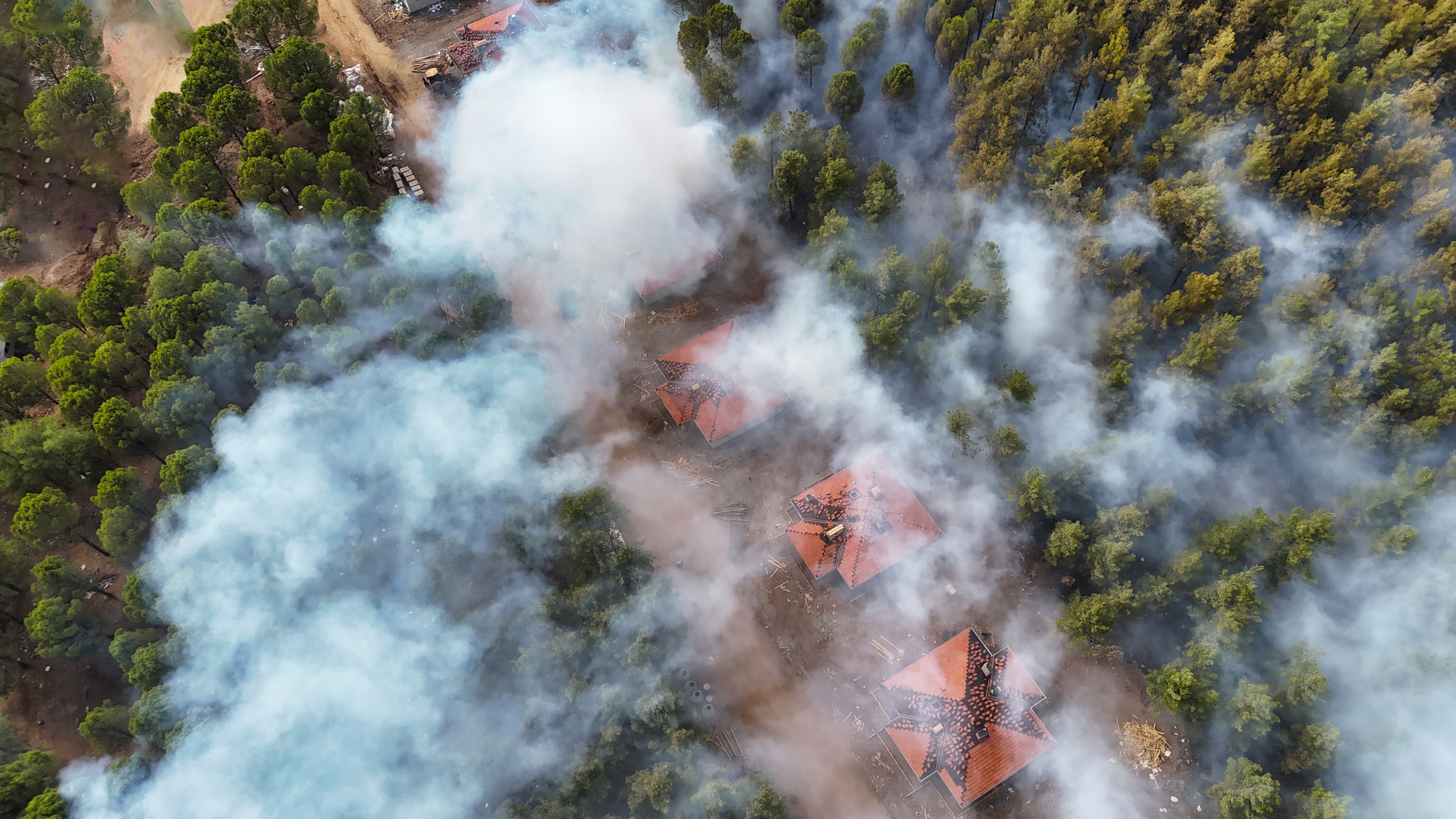
The parties’ dispute arose out of a fire that burned about a half mile from the plaintiffs’ home. The home did not sustain any burn damage. However, plaintiffs’ home was covered with soot and ash. In addition, it sustained smoke damage. The fire debris entered the plaintiffs’ home and fell into their pool. The plaintiffs tendered a claim for property damage to Wawanesa under a homeowner property insurance policy under the section affording coverage for “Perils Insured Against” insuring for “direct physical loss to property.”
Wawanesa used experts to inspect the home on several occasions and ultimately paid the plaintiffs $20,718.09 (inclusive of the deductible). In response, the plaintiffs contended that their home sustained extensive damage requiring cleaning, as well as interior painting, exterior wood and stucco painting, replacement of attic insulation, swimming pool work and cleaning the HVAC system. The total amount claimed by plaintiffs for this damage was $35,553.10.
Wawanesa did not agree to pay for the additional damages claimed by plaintiffs. As a result, plaintiffs filed a lawsuit for breach of contract and bad faith. In response, Wawanesa filed a motion for summary judgment arguing that plaintiffs’ home did not sustain physical loss. The trial court agreed with Wawanesa and granted summary judgment in favor of Wawanesa.
In affirming the trial court’s entry of summary judgment, the Court of Appeal reasoned as follows:
“Under California law, direct physical loss or damage to property requires a distinct, demonstrable, physical alteration to property. The physical alteration need not be visible to the naked eye, nor must it be structural, but it must result in some injury to or impairment of the property as property.” (Another Planet Entertainment, LLC v. Vigilant Ins. Co. (2024) 15 Cal.5th 1106, 1117 [320 Cal. Rptr. 3d 843, 548 P.3d 303] (Another Planet).)
Here there is no evidence of any “direct physical loss to [plaintiffs'] property.” The wildfire debris did not “alter the property itself in a lasting and persistent manner.” (Another Planet, supra, 15 Cal.5th at p. 1149.) Rather, all evidence indicates that the debris was “easily cleaned or removed from the property.” (Another Planet, supra, 15 Cal.5th at p. 1140.) Such debris does not constitute “direct physical loss to property.” (Ibid.)
In reaching this conclusion, we reject plaintiffs' contention that Another Planet does not govern the instant case. While Another Planet answered the question of whether the actual or potential presence of the COVID-19 virus on an insured's premises could constitute direct physical loss or damage (Another Planet, supra, 15 Cal.5th at p. 1117), its reasoning squarely applies here. Before answering the question posed, our Supreme Court pointed out that it had “not previously interpreted the phrase ‘physical loss or damage’ (or ‘direct physical loss or damage’) as the phrase is commonly used in property insurance policies.” (Another Planet, supra, at p. 1123.) It went on to “summarize the most pertinent” appellate court cases that addressed the meaning of this phrase. (Ibid.; see also id. at pp. 1123–1134.) With this case law in mind, along with principles of contract interpretation, the Court concluded that “direct physical damage” means that “the property itself [was] physically harmed or impaired.” (Id. at p. 1137.) “Loss” too encompasses some physicality to the loss. (Id. at p. 1138.) In sum, “[t]he long-standing California view that direct physical loss to property requires a distinct, demonstrable, physical alteration of property is correct.” (Id. at p. 1139.) Nothing in this analysis or conclusion suggests that it is limited to claims related to COVID-19.
Because coverage was not afforded to plaintiffs’ for their loss under the Wawanesa policy, the Court of Appeal also affirmed the trial court’s holding that Wawanesa did not act in bad faith.