U.K. Court Finds U.K. and U.S. Sanctions Override Payment of Letters of Credit

Washington, D.C. (July 16, 2024) - On June 11, 2024, in its decision in the Celestial Aviation Services Limited v. UniCredit Bank GmbH case, the Court of Appeal for England and Wales (“Court”) issued a significant ruling on the impact of U.K. and U.S. sanctions on payment obligations under letters of credit (“LCs”). While the court below found that UniCredit was obligated to pay the LCs, on appeal the Court determined that the imposition of sanctions imposed by the United Kingdom and the United States prevented payment on the LCs.
In an earlier case addressing similar issues, Singapore’s Court of Appeal ruled that a bank’s determination that a vessel was subject to U.S. sanctions laws and regulations was an insufficient basis for denying payment to a beneficiary on letters of credit for which the bank was responsible.
The dispute centered on UniCredit’s obligations under standby letters of credit issued by Sberbank, a Russian bank that was sanctioned by OFAC on February 24, 2022, for aircraft leased to Russian airlines AirBridge Cargo Airlines LLC and JSC Aurora Airlines prior to the imposition of sanctions. Following the termination of the leases in March 2022, due to defaults and subsequent demands for payment under the LCs, UniCredit claimed it could not pay as a consequence of U.K. and U.S. sanctions imposed after the commencement of the conflict with Ukraine. The plaintiffs initiated legal action seeking approximately $69.3 million in total.
Regarding the U.K. sanctions, the Court overturned the lower court's decision, holding that payment under the standby LCs was prohibited by Regulation 28(3). The Court interpreted the key phrase "in connection with" in Reg. 28(3) broadly, finding that payment under the LCs would be connected to the aircraft leases, which were arrangements for making aircraft available for use in Russia. Importantly, the Court held that the regulation applied even though the leases and LCs pre-dated the sanctions, emphasizing that the purpose of those measures was to put pressure on Russia using a "relatively blunt instrument.”
On the matter of U.S. sanctions, while not reaching a definitive conclusion, the Court criticized the lower court's view that payment could be made in cash or alternative currency to avoid U.S. sanctions. The Court noted that the LCs specifically required U.S. dollar transfers, which could potentially implicate U.S. sanctions. However, the Court ultimately held that UniCredit was precluded from relying on U.S. sanctions because it failed to make reasonable efforts to obtain a license from U.S. authorities.
The Court allowed UniCredit's appeal in part, ruling that its obligation to pay under the LCs was suspended until U.K. licenses were obtained in October/November 2022. Consequently, UniCredit was not liable for interest or costs for the period before U.K. licenses were granted. However, the Court left open the possibility of UniCredit's liability for interest during a six-week period between obtaining U.K. licenses and making payments, due to its failure to properly pursue U.S. licenses.
Significantly, the court emphasized that the prohibition arose from the sanctions regulations themselves, not from when the payment obligation originated. The LCs were caught by Reg 28(3) despite the obligation’s pre-dating the sanctions, as the regulation was intended to cast a wide net to pressure Russia.
This decision demonstrates at least one major court’s willingness to interpret sanctions regulations broadly to achieve their intended purpose of exerting pressure on targeted countries. It also highlights the complex interplay between different national sanctions regimes and underscores the importance of seeking expert advice when dealing with financial obligations that may be affected by sanctions and one or more country’s licensing authorities.
Lewis Brisbois’ experienced attorneys are assisting clients as they navigate the complexities of U.S. sanction laws and regulations. For more information related to this alert, please contact the authors of this alert. For more alerts in this area, please visit the Ukraine Conflict Response page.
Authors:
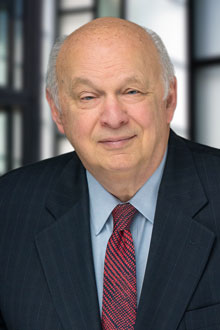
Thomas A. Brooks, Partner
J. Chaisson Bowen, Summer Associate
Editors:
Jane C. Luxton, Managing Partner - Washington, D.C.
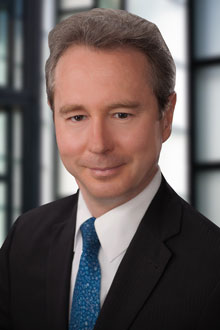
Andrew Pidgirsky, Partner and Chair of Ukraine Conflict Response Practice
Related Practices
Related Attorneys
Partners
-
-

-
 202.558.0667


Latest News
- January 13, 2026 Shawn Schatzle Pens Law360 Expert Analysis On New York’s AVOID Act
- January 13, 2026 Francis Pileggi Speaks With Law360 Pulse For Article On Delaware Legal Leaders’ Predictions for 2026
- January 12, 2026 Lewis Brisbois Bolsters Firm Leadership With Highly Experienced Chief Administrative Officer Hire