As all employers should well know by now, the Americans with Disabilities Act (ADA) and many state and local counterparts may require employers to engage in an interactive process in response to a disabled employee’s request for a workplace accommodation. A recent ruling by the First Circuit Court of Appeals illustrates why employers have a very strong financial incentive to be proactive in adopting and rigorously enforcing their disability accommodation policies.
Read more »Latest Blog Posts
-
 Ignoring Employee ADA Accommodation Requests Can Be Costly – A Cautionary Tale Posted on: February 22, 2021 In: Labor & Employment
-
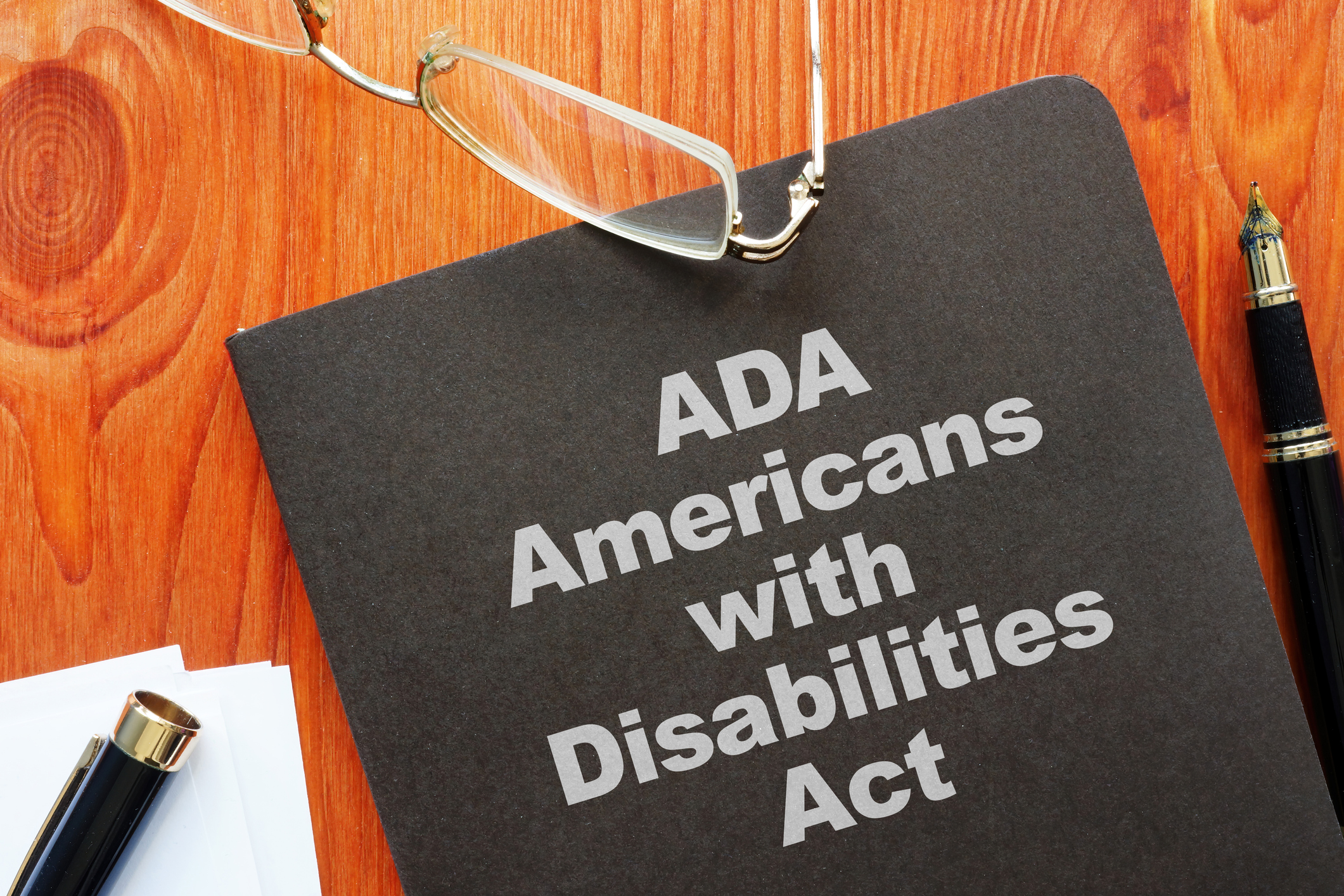 Fourth Circuit Clarifies Employers Not Required to Abandon “Disability Neutral” Competitive Hiring Systems to Reassign Disabled Employee Posted on: February 17, 2021 In: Labor & Employment
The Americans with Disabilities Act’s (ADA) reasonable accommodation duty often creates frustrating uncertainty for employers and employees. Reassignment, a term used in the ADA’s statutory language as an example of a potential reasonable accommodation, is fraught with uncertainty when evaluated by employers and employees as a potential accommodation. The Fourth Circuit recently addressed the reassignment dilemma in Ellege v. Lowe’s Home Centers, LLC.
Read more »
-
 Canada Introduces Legislation to Revamp Federal Privacy Landscape Posted on: February 16, 2021 In: Data Privacy & Cybersecurity
The Canadian House of Commons introduced draft legislation that, if enacted, would align federal Canadian privacy law with the European Union’s General Data Protection Regulation (GDPR) and the California Consumer Privacy Act (CCPA). The draft legislation, titled the Consumer Privacy Protection Act (CPPA), proposes significant advancements to the current legal regime governing personal data.
Read more »
-
 Top Five Cybersecurity Suggestions for 2021 Posted on: February 12, 2021 In: Data Privacy & Cybersecurity
As hard as it is to believe, we are already more than a month into 2021 – and our Data Privacy & Cybersecurity Team is well on its way to managing over 2,000 data security incidents this year. It serves as an important reminder that a few cybersecurity suggestions can have a big impact as we embrace the months to come. The following are our top five suggestions to enhance the security of your network, detect intruders more quickly, and reduce the scope and expense of data security events this year.
Read more »
-
 Don’t Forget the HIPAA Small Breach Notification Deadline of March 1, 2021. It’s Right Around the Corner! Posted on: February 10, 2021 In: Data Privacy & Cybersecurity
Despite all that made 2020 an unusual year, data security incidents did not slow down. For organizations that are covered by the Health Insurance Portability and Accountability Act (HIPAA), the deadline to report small incidents is fast approaching. Organizations that experienced a data security incident in 2020, which affected the protected health information (PHI) of less than 500 individuals, have until March 1, 2021 to submit their notification to the U.S. Dept. of Health & Human Services.
Read more »
-
 CCPA 2.0 and the Changing Privacy Landscape, Part V: New & Expanded Consumer Rights Posted on: February 08, 2021 In: Data Privacy & Cybersecurity
The newly-passed California Privacy Rights Act (CPRA) includes additional and expanded consumer rights not currently existing under the California Consumer Privacy Act (CCPA). This fifth installment in our series about the changes to the CCPA brought by the CPRA focuses on consumers’ new rights of correction and access to certain personal information and revisions to certain existing consumer rights in the CCPA, including rights to know (and access), deletion, non-discrimination, and rights for minors.
Read more »
-
 Trade Secrets Litigation Just Got More Complicated Posted on: February 03, 2021 In: Intellectual Property & Technology
In January, federal courts around the country issued new security procedures intended to protect highly sensitive documents (HSDs), following a cybersecurity breach at an electronic filing system vendor. Now, HSDs must be filed in person or via mail and, once received by the court, will be stored in a secure stand-alone computer system. While the concept it straightforward, its implementation is far from simple, as the court orders vary widely and leave a lot of open questions.
Read more »
-
 CCPA 2.0 and the Changing Privacy Landscape, Part IV: Data Minimization & Retention Posted on: January 26, 2021 In: Data Privacy & Cybersecurity
The fourth installment in our ongoing series about changes to the California Consumer Privacy Act (CCPA) focuses on the new data minimization and data retention requirements for subject businesses created by the passage of the California Privacy Rights Act (CPRA) on November 3, 2020. These provisions also obligate subject entities to implement business-wide internal policy changes to accommodate the possible need to change their data collection and retention policies before the CPRA is fully operative.
Read more »
-
 What to Expect When Your Employee Is Expecting: A Refresher on California’s Pregnancy-Related Leave Laws Posted on: January 26, 2021 In: Labor & Employment
Given that California is known as one of the most employee-friendly states, it follows that California’s pregnancy and parental leave laws are among the most generous in the nation. These laws greatly benefit new and expecting parents; however, their varying components can lead to substantial confusion for employers. While every situation is different and requires a case-by-case analysis, this post's guidance will help navigate the nuances of pregnancy-related leave laws applicable in California.
Read more »
-
 Office of Foreign Assets Control Guidance on Ransomware Payments Posted on: January 21, 2021 In: Data Privacy & Cybersecurity
The United States Department of Treasury’s Office of Foreign Assets Control (OFAC) is broadly tasked with administering and enforcing economic trade sanctions based on United States foreign policy and national security goals. On October 1, 2020, OFAC issued an “Advisory on Potential Sanctions Risks for Facilitating Ransomware Payments” to companies providing services to victims of ransomware attacks.
Read more »
-
 California Family Rights Act’s Expanded Applicability & Coverage: What Employers Need to Know Posted on: January 19, 2021 In: Labor & Employment
On January 1, 2021, California Senate Bill 1383 (SB 1383), signed into law by Governor Gavin Newsom on September 17, 2020, became effective, significantly expanding the California Family Rights Act’s (CFRA) applicability and coverage. The CFRA provides qualified employees with 12 weeks of unpaid leave and job protection for qualified leave events, such as time to bond with a new child, caring for qualified family members who are experiencing a serious health condition.
Read more »
-
 CCPA 2.0 and the Changing Privacy Landscape, Part III: Notice Obligations & Right to Opt Out Posted on: January 15, 2021 In: Data Privacy & Cybersecurity
This third installment in our ongoing series about changes to the California Consumer Privacy Act (CCPA) focuses on the new consumer opt-out rights and business disclosure obligations created by the California Privacy Rights Act (CPRA), which was approved by voters last November. Part I of this series looked at the CPRA’s definition and treatment of “sensitive personal information.” Part II discussed covered “businesses” and exemptions.
Read more »


Blog Search
Featured Posts
- February 10, 2023 Historic Hermès Jury Verdict Paves Way for Digital Trademark Rights
- January 13, 2023 Sports Law: A Year in Review & What to Watch for in 2023
- January 06, 2023 Federal Trade Commission Cracks Down on Non-Compete Agreements
- December 06, 2022 Just In Time: Last Minute Compliance Tips for the CPRA and VCDPA
Blog Categories
Blog Tags
9th circuit
ada
arbitration
breach notification
california
ccpa
college
college athletes
college sports
colorado
compensation
compliance
congress
consumer data
consumer notification
copyright
coronavirus
covid-19
cpra
cybersecurity
cyber threat
data breach
data privacy
data security
discrimination
dol
eeoc
employee handbook
employers
employment
employment agreements
employment law
equal pay
european union
executive order
family leave
fbi
fcra
federal circuit
florida
flsa
fmla
gdpr
hacking
healthcare
hipaa
hiring
human resources
identity theft
illinois
incident response
independent contractors
infringement
intellectual property
inter partes review
irs
labor law
legislative alert
litigation
malware
marijuana
massachusetts
medical leave
minimum wage
multi-factor identification
ncaa
new jersey
new york
nil
nlrb
non-competition
osha
overtime
paid leave
patent law
patents
payroll
personal data
personal information
phishing
privacy law
privacy protection patchwork
ptab
ransomware
reasonable accommodation
sexual harassment
sports
sports law
statute
student-athletes
student athletes
supreme court
title ix
title vii
trademark
trade secrets
virginia
wage and hour
washington
workplace safety