 Intellectual Property & Technology Practice
On March 4, 2019, the Supreme Court issued a unanimous decision overturning the Ninth Circuit Court's award of $12.8 million in costs in the copyright infringement matter Rimini Street, Inc. et al v. Oracle USA, Inc. et al. Newly confirmed Justice Kavanaugh penned the opinion for the Court, holding that the Ninth Circuit's expanded view of "full costs" set forth in 28 U.S.C. §§ 1920 and 1821 was improper, going beyond the "costs" typically available to copyright litigants
Read more »Intellectual Property & Technology
-
 ‘Full Moon’ Costs Denied by Supreme Court in Oracle Copyright Case Posted on: March 14, 2019 In: Intellectual Property & Technology
-
 USPTO Supports “Counterintuitive” Interpretation of AIA in Amicus Brief to Fed Circuit Court of Appeals Posted on: March 07, 2019 In: Intellectual Property & Technology
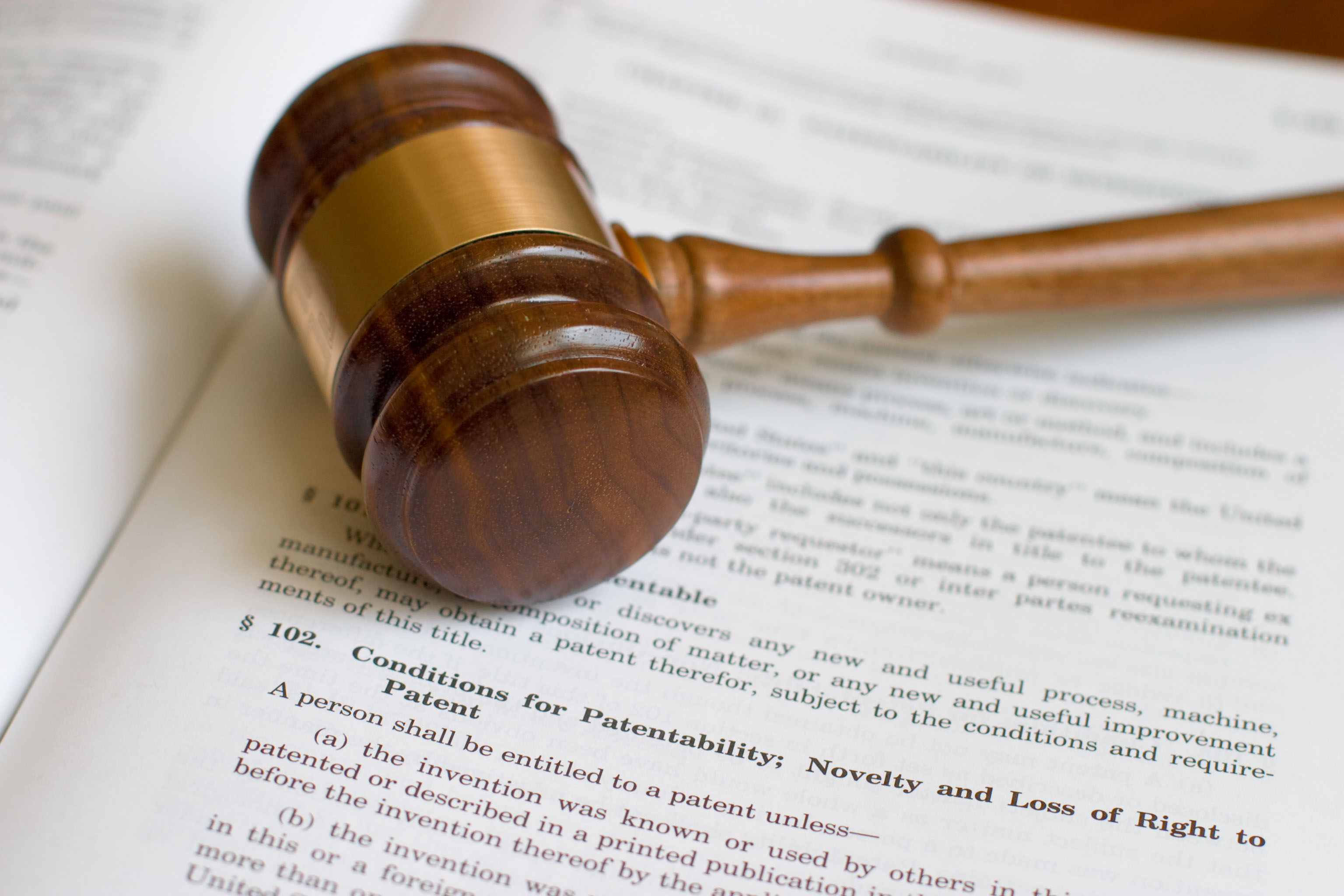
Oral Arguments Scheduled for Next Week - In a curious legal scenario, the USPTO recently filed an amicus brief at the request of the Federal Circuit Court of Appeals, supporting a “counterintuitive” reading of the American Invents Act (AIA). This stems from an interesting argument made by Johnson & Johnson subsidiary company Janssen Oncology, Inc. regarding estoppel under the AIA.
Read more »
-
 Supreme Court Concludes That Copyright Registration Is A Prerequisite To Filing Copyright Lawsuit Posted on: March 04, 2019 In: Intellectual Property & Technology
In a decision that did not surprise many, the United State Supreme Court held unanimously that indeed, the Copyright Act means what is says, namely, “no civil action for infringement of the copyright in any United State work shall be instituted until… registration of the copyright claim has been made in accordance with this title.”
Read more »
-
 PTAB Denies Post-Grant Review Request That Relied on Social Media Evidence Posted on: February 04, 2019 In: Intellectual Property & Technology
The Patent Trial and Appeal Board (PTAB) recently denied a request for a post-grant review of a design patent that relied on evidence from social media, casting doubt on the ability to use such evidence when attempting to invalidate patents.
Read more »
-
 Huawei Trade Secrets Indictment is Cautionary Tale for Tech Partnerships Posted on: January 29, 2019 In: Intellectual Property & Technology
In a case that will be watched closely by both national security personnel and intellectual property counsellors in the United States and China, federal prosecutors unsealed a 10-count indictment in the Western District of Washington State on Thursday, January 28, 2019 against Huawei Device Company Ltd. and Huawei Device Company, U.S.A. Huawei is the largest supplier of telecom equipment in the world and the indictment charges the company with theft of trade secrets conspiracy, attempted theft of trade
Read more »
-
Supreme Court Rules that AIA Did Not Alter the On-Sale Doctrine Posted on: January 24, 2019 In: Intellectual Property & Technology
The U.S. Supreme Court recently ruled that the phrase “or otherwise available to the public” added to 35 U.S.C. § 102 in the America Invents Act in 2011 did not change the “on-sale” doctrine, which provides that patent protection cannot be granted for an invention that was on-sale more than one year before the effective filing date of the patent.
Read more »
-
 Copyright First Sale Doctrine Inapplicable to “Used” Digital Music: Second Circuit Posted on: January 24, 2019 In: Intellectual Property & Technology
Copyright law’s First Sale Doctrine is the foundation of the music resale business. This doctrine mandates that a lawful purchaser of a copy of a copyrighted work is free to resell that particular copy without infringing the copyright holder’s distribution rights. he digital music resale business, however, was recently presented with a serious obstacle by a Second Circuit decision.
Read more »
-
 Preserving Patent Rights on a Global Stage: Foreign Filing Options and How to Successfully Navigate Novelty Requirements Posted on: January 17, 2019 In: Intellectual Property & Technology
Patent applicants often wish to expand patent protection by filing outside the U.S. These applicants can take advantage of a few options – direct filing, filing through the PCT, and regional filings. But, prior public disclosure of an invention could be an insurmountable hurdle that may prevent applicants from achieving their goals.
Read more »
-
 The Other Shoe Drops: CA Appellate Court Holds Non-Solicitation of Employees Restrictions Also Unenforceable Posted on: December 21, 2018 In: Intellectual Property & Technology
Since 2008, California courts have refused to enforce non-solicitation of customer provisions in employment contracts. On November 1, 2018, in AMN Healthcare, Inc. v Aya Healthcare Services, Inc., the California Court of Appeal for the Fourth Appellate District expanded this concept to include non-solicitation of employees restrictions (also known as anti-raiding provisions) as well.
Read more »
-
 “Blurred Lines” Final Judgment May Signal Paradigm Shift for Entertainment Copyright Law Posted on: December 19, 2018 In: Intellectual Property & Technology
In March 2018, the Ninth Circuit Court of Appeals rendered a landmark decision in the copyright infringement litigation surrounding Pharrell Williams and Robin Thicke’s song, “Blurred Lines.” The appellate court upheld a 2015 jury verdict finding that ”Blurred Lines” infringed Marvin Gaye’s copyright to the 1977 hit “Got to Give it Up” because the two songs were too similar.
Read more »
-
 Federal Circuit Warns Patent Holders to Reconsider Cease and Desist Letters Posted on: December 11, 2018 In: Intellectual Property & Technology
Sending a cease and desist letter to a patent infringer should never be taken lightly. In particular, patent-related demand letters can have a profound impact on both substantive and procedural strategic decisions. In its recent decision in Jack Henry & Associated et al v. Plano Encryption Technologies, LLC, the Federal Circuit determined that the mere sending of a cease and desist letter could force the sender to litigate the issues outlined in the letter in the home court of the accused infringer.
Read more »
-
 2018 in review – Inter Partes Review Developments, Part 2 of 2 Posted on: December 11, 2018 In: Intellectual Property & Technology
Following the Oil States decision in which the Supreme Court invoked the public rights doctrine to protect the Patent Trial and Appeal Board’s (PTAB) authority to invalidate patents by inter partes review (IPR), the Federal Circuit used a similar line of reasoning to determine whether tribal sovereign immunity could bar this form of patent review.
Read more »


Blog Search
Featured Posts
- February 10, 2023 Historic Hermès Jury Verdict Paves Way for Digital Trademark Rights
Blog Tags
2nd circuit
7th circuit
9th circuit
america invents act
anheuser-busch
anti-raiding
attorney-client privilege
bankruptcy
birkin
blockchain
cafc
california
cease and desist
cleaning product right to know act
clinical trials
copyright
copyright office
copyright registration
coronavirus
covid-19
crca
delaware
design patent
design rights
digital assets
digital music
discovery
doctrine of equivalents
document review
electronic filing
email
employment law
enhanced damages
experimentation
federal circuit
federal courts
first amendment
first sale doctrine
foreign filing
free speech
full costs
hermès
hhs
highly sensitive documents
hot news
howey test
huawei
infringement
intellectual property
inter partes review
inventor
ip
ipr sovereign immunity
ipr time-bar
lanham act
led zeppelin
litigation
misappropriation
molson-coors
music
nda
nft
ninth circuit
non-solicitation
obviousness
on-sale doctrine
oracle
patent
patent application
patent infringement
patent law
patent litigation
patents
pirate ship
post-grant review
precise numerical values
products liability
professional sports
proprietary formula
ptab
redigi
rogers test
sec
securities
social media
sovereign immunity
specimens
supreme court
taylor swift
technology
trade dress
trademark
trademark application
trademark law
trade secrets
uniform trade secrets act
uspto
utility patent
venue
wearable technology