On March 27, 2019, Utah Governor Gary Herbert signed House Bill (HB) 57 – known as the Electronic Information or Data Privacy Act – into law, making Utah the first state to protect information that individuals have shared with certain third parties. Among its provisions, HB 57 states that, effective May 14, 2019, law enforcement may not generally obtain certain types of “electronic information or data” for use in a criminal investigation or prosecution without first obtaining a search warrant.
Read more »Latest Blog Posts
-
 Utah Requires Warrant for Law Enforcement Access to Certain Types of Data Posted on: April 12, 2019 In: Data Privacy & Cybersecurity
-
 Virginia & Utah Amend Data Breach Statutes Posted on: April 09, 2019 In: Data Privacy & Cybersecurity
On March 18, 2019, the commonwealth of Virginia enacted House Bill (HB) 2396, amending the commonwealth’s data breach notification statute. Specifically, HB 2396 expanded the commonwealth’s definition of “personal information” sufficient to trigger a notification obligation following a data security incident. Effective July 1, 2019, “personal information” will be defined to include both passport number and military identification number in addition to those data sets that were previously regulated.
Read more »
-
 Improving Your Office365 Security Posture to Stop Phishing at Email’s Shores Posted on: April 03, 2019 In: Data Privacy & Cybersecurity
Phishing attacks and other email compromise schemes are not just an annoyance in the modern workspace. A successful email compromise can allow malicious actors to intrude into an organization’s enterprise email accounts, expose sensitive data contained in users’ inboxes, and give cyber criminals the ability to successfully impersonate an employee to others within and without the organization by using the employee’s own email account.
Read more »
-
 The Financial Fraud Kill Chain: Combatting Fraudulent Money Transfers Posted on: April 02, 2019 In: Data Privacy & Cybersecurity
Businesses are constantly targeted by criminals attempting to gain access to information that will allow them to fraudulently divert wire transfers. This often occurs after the criminal has conducted sufficient reconnaissance to determine who likely has an occupational role to approve or initiate wire transfers. The employee will then be targeted – often a financial executive like a Chief Financial Officer – and their email account will be compromised. But this can be prevented.
Read more »
-
 ‘Not for Eternity’ – Implications From The Supreme Court Reversal of a Deceased Judge’s Ruling Posted on: March 28, 2019 In: Labor & Employment
The law is an ever-evolving and unpredictable thing. As are the courts and their judges – whether dead or alive. The conservative majority on the U.S. Supreme Court typically has no difficulty finding reasons to vacate or reverse a decision from the notoriously liberal Ninth Circuit Court of Appeals.
Read more »
-
 A Guide To The Revised New Jersey Minimum Wage Law Posted on: March 26, 2019 In: Labor & Employment
New Jersey recently passed legislation to gradually increase its current minimum wage of $8.85 per hour to $15.00 per hour by 2024. Initially, the minimum wage will increase to $10.00 per hour on July 1, 2019. However, as with most laws, there are exceptions to the minimum wage increase schedule.
Read more »
-
 Emerging Trend: Managed Service Providers Targeted with Ransomware Posted on: March 25, 2019 In: Data Privacy & Cybersecurity
An emerging cyber-attack trend is shifting the paradigm for both cyber-preparedness and incident response: ransomware attacks targeting managed service providers. This is, in part, because the size of these attacks can be an order of magnitude larger in terms of the number of entities that are simultaneously affected, and because of the corresponding large-scale efforts that must be undertaken to swiftly and effectively remediate these attacks.
Read more »
-
 Choosing the Wrong Partners in a Ransomware Attack - Making a Bad Situation Worse Posted on: March 22, 2019 In: Data Privacy & Cybersecurity
Companies who make a Bitcoin payment in the face of a ransomware attack may run afoul of U.S. anti-money laundering laws. In particular, any company that makes such a payment risks being categorized as a “money service business” under the Bank Secrecy Act and corresponding U.S. Treasury regulations, opening them up to a whole host of compliance statutes and regulations.
Read more »
-
 Scabby the Rat Finally Gets Popped Posted on: March 22, 2019 In: Labor & Employment
The Seventh Circuit Court of Appeals ruled last month that a Wisconsin town did not violate a local union’s First Amendment rights when it required the union to remove a giant inflatable rat staked to a public highway median. The appellate court held the cities’ zoning ordinance, which banned all private signs on public rights-of-way, allowed the city to deflate the rat without running afoul of the First Amendment.
Read more »
-
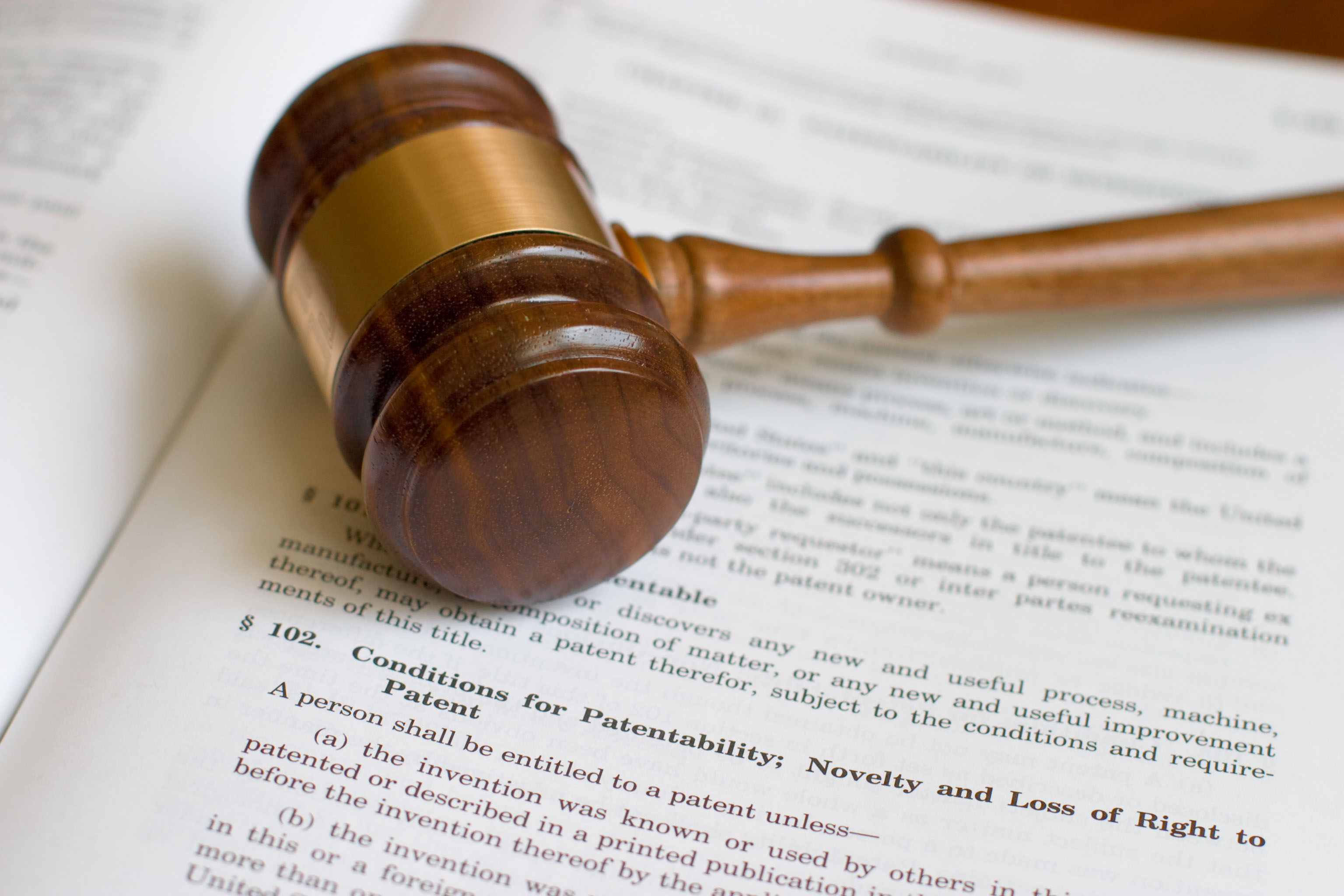 The Ongoing Evolution Of Patent Venue Posted on: March 21, 2019 In: Intellectual Property & Technology
A refresher and update on the ongoing evolution of what constitutes proper venue in a patent case. For over 20 years, venue in a patent case was proper in essentially any court in the United States. That all changed in May 2017 when the Supreme Court held in TC Heartland LLC v. Kraft Food Grp. Brands, LLC that 28 U.S.C. §1400(b) is the sole and exclusive venue provision for patent infringement actions, and cannot be supplemented by the general venue statute at 28 U.S.C. §1391.
Read more »
-
 In Like a Lion: An Employer’s Guide to Handling Inclement Weather Posted on: March 20, 2019 In: Labor & Employment
Even though it’s March, we’re not out of the woods yet in terms of having to deal with inclement weather. As the Midwest experiences historic flooding, it is reminder that bad weather is always an issue, no matter where you live or what time of year, and now is as a good a time as any for employers to review their handbooks and determine whether they have effective (and compliant) inclement weather policies in place. Here are six things to consider when drafting or updating your inclement weather policy.
Read more »
-
 Double Whammy! Handling Overlapping Employment & Criminal Investigations Posted on: March 18, 2019 In: Labor & Employment
It is a situation all employers hope to avoid—alleged criminal misconduct in the workplace. However, if this happens, employers must be prepared to juggle both the civil and criminal actions. Here are five tips for dealing with concurrent investigations.
Read more »


Blog Search
Featured Posts
- February 10, 2023 Historic Hermès Jury Verdict Paves Way for Digital Trademark Rights
- January 13, 2023 Sports Law: A Year in Review & What to Watch for in 2023
- January 06, 2023 Federal Trade Commission Cracks Down on Non-Compete Agreements
- December 06, 2022 Just In Time: Last Minute Compliance Tips for the CPRA and VCDPA
Blog Categories
Blog Tags
9th circuit
ada
america invents act
arbitration
breach notification
california
ccpa
college
college sports
colorado
compensation
compliance
congress
consumer data
consumer notification
copyright
coronavirus
covid-19
cpra
cybersecurity
cyber threat
data breach
data privacy
data security
discrimination
dol
eeoc
employee handbook
employers
employment
employment agreements
employment law
equal pay
european union
executive order
family leave
fbi
fcra
federal circuit
florida
flsa
fmla
gdpr
hacking
healthcare
hipaa
hiring
human resources
identity theft
illinois
incident response
independent contractors
infringement
intellectual property
inter partes review
irs
labor law
legislative alert
litigation
malware
marijuana
massachusetts
medical leave
minimum wage
multi-factor identification
ncaa
new jersey
new york
nil
nlrb
non-competition
osha
overtime
paid leave
patent law
patents
payroll
personal data
personal information
phishing
privacy law
privacy protection patchwork
ptab
ransomware
reasonable accommodation
sexual harassment
sports
sports law
statute
student-athletes
student athletes
supreme court
title ix
title vii
trademark
trade secrets
virginia
wage and hour
washington
workplace safety