If you process or store Form W-2 Wage and Tax Statements, you are a target. The Form W-2 contains everything a malicious actor needs to file a false tax return with the Internal Revenue Service (IRS) and steal a refund. Because a W-2 contains a consumer Social Security number (SSN), it is highly valued on the dark web, and therefore highly sought after by thieves.
Read more »Latest Blog Posts
-
 W-2 Image Exploits: With the Tax Season Come the Thieves Posted on: January 10, 2019 In: Data Privacy & Cybersecurity
-
 Tax Return Theft: Tips for Prevention & Response Posted on: January 08, 2019 In: Data Privacy & Cybersecurity
As the Internal Revenue Service warned tax professionals last month, malicious actors are currently attempting to hack into tax preparers’ networks to steal 2019 tax return information. If you are a professional tax preparer, you are a target – regardless of the size of your business. Malicious actors target information including tax returns filed in previous years, Form W-2 Wage and Tax Statement images, and anything than contains unredacted Social Security numbers
Read more »
-
 Ransomware: Recommendations for Preparation and Response Posted on: January 03, 2019 In: Data Privacy & Cybersecurity
The response to an encryption attack can be very difficult. Encrypted critical data usually places a business in a crisis with no ability – or an extremely limited ability – to conduct basic operations. Too few organizations have developed incident response plans providing for contingent or out-of-band communications. Often, before consulting any incident response experts, the victim business has communicated with the attacker and revealed information that the attacker is able to leverage in negotiations.
Read more »
-
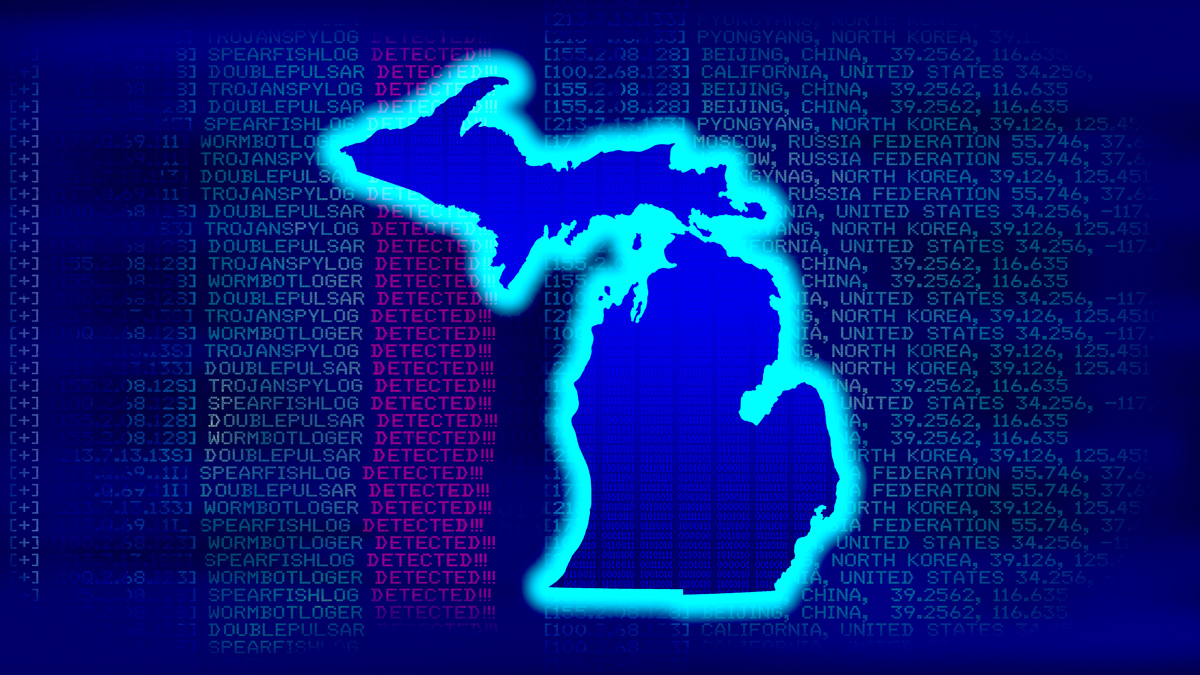 Michigan Next State to Adopt Insurance Data Security Model Law Posted on: January 03, 2019 In: Data Privacy & Cybersecurity
Michigan is poised to become the next state to adopt a data security law similar to the Insurance Data Security Model Law advocated by the National Association of Insurance Commissioners (NAIC). Michigan House Bill 6491, passed by the Michigan House during Michigan’s 99th Legislative Session on December 6, 2018, and passed by the Michigan Senate on December 19, 2018, was presented to its then-Governor Rick Snyder on December 27, 2018.
Read more »
-
 Cybersecurity Resolutions for 2019 Posted on: December 28, 2018 In: Data Privacy & Cybersecurity
A new year is upon us, which means people across the world will resolve to exercise more, eat healthier, eliminate financial debt and, most importantly, enhance their cybersecurity over the coming year. More than the typical New Year’s resolutions, improving your individual and corporate cybersecurity defenses can be easier to achieve and sustain. With that in mind, here are a few cybersecurity resolutions to add to your new year’s list, and a few tips for achieving them in 2019.
Read more »
-
 The Other Shoe Drops: CA Appellate Court Holds Non-Solicitation of Employees Restrictions Also Unenforceable Posted on: December 21, 2018 In: Intellectual Property & Technology
Since 2008, California courts have refused to enforce non-solicitation of customer provisions in employment contracts. On November 1, 2018, in AMN Healthcare, Inc. v Aya Healthcare Services, Inc., the California Court of Appeal for the Fourth Appellate District expanded this concept to include non-solicitation of employees restrictions (also known as anti-raiding provisions) as well.
Read more »
-
 “Blurred Lines” Final Judgment May Signal Paradigm Shift for Entertainment Copyright Law Posted on: December 19, 2018 In: Intellectual Property & Technology
In March 2018, the Ninth Circuit Court of Appeals rendered a landmark decision in the copyright infringement litigation surrounding Pharrell Williams and Robin Thicke’s song, “Blurred Lines.” The appellate court upheld a 2015 jury verdict finding that ”Blurred Lines” infringed Marvin Gaye’s copyright to the 1977 hit “Got to Give it Up” because the two songs were too similar.
Read more »
-
 Federal Circuit Warns Patent Holders to Reconsider Cease and Desist Letters Posted on: December 11, 2018 In: Intellectual Property & Technology
Sending a cease and desist letter to a patent infringer should never be taken lightly. In particular, patent-related demand letters can have a profound impact on both substantive and procedural strategic decisions. In its recent decision in Jack Henry & Associated et al v. Plano Encryption Technologies, LLC, the Federal Circuit determined that the mere sending of a cease and desist letter could force the sender to litigate the issues outlined in the letter in the home court of the accused infringer.
Read more »
-
 2018 in review – Inter Partes Review Developments, Part 2 of 2 Posted on: December 11, 2018 In: Intellectual Property & Technology
Following the Oil States decision in which the Supreme Court invoked the public rights doctrine to protect the Patent Trial and Appeal Board’s (PTAB) authority to invalidate patents by inter partes review (IPR), the Federal Circuit used a similar line of reasoning to determine whether tribal sovereign immunity could bar this form of patent review.
Read more »
-
 2018 in review – Inter Partes Review Developments, Part 1 of 2 Posted on: December 07, 2018 In: Intellectual Property & Technology
In one of the most heavily anticipated, and in some ways controversial, decision of the year, the Supreme Court ruled in Oil States Energy Services v. Green’s Energy Group to uphold the Patent Trial and Appeal Board’s (PTAB) authority to invalidate patents by inter partes review.
Read more »
-
 Welcome to Lewis Brisbois’ IP & Technology Law Blog Posted on: December 05, 2018 In: Intellectual Property & Technology
The realm of Intellectual Property and Technology law can be tough to keep up with. The 10 millionth US patent was issued in June 2018. Valuable IP and strong branding are coveted business assets for both established and start-up companies, nationally and internationally. In recent years, the amount of IP and patent litigation has soared, and the rapid pace of technological development will only see these cases increase as companies seek to protect and defend their creative assets.
Read more »
-
 Lack of Code Diversity in Cryptocurrency Ethereum May be Propagating Bad Code Posted on: November 12, 2018 In: Data Privacy & Cybersecurity
Ethereum, one of the most popular cryptocurrencies with a market cap of more than $21.8 billon, is causing serious anxiety in the cryptocurrency marketplace. Code integrity concerns have resulted in $170 million in cryptocurrency being frozen, and one recent security compromise caused $38,000 in losses to users. New research has further heightened concerns about the coin’s ecosystem itself.
Read more »


Blog Search
Featured Posts
- February 10, 2023 Historic Hermès Jury Verdict Paves Way for Digital Trademark Rights
- January 13, 2023 Sports Law: A Year in Review & What to Watch for in 2023
- January 06, 2023 Federal Trade Commission Cracks Down on Non-Compete Agreements
- December 06, 2022 Just In Time: Last Minute Compliance Tips for the CPRA and VCDPA
Blog Categories
Blog Tags
9th circuit
ada
america invents act
arbitration
breach notification
california
ccpa
college
college athletes
college sports
colorado
compensation
compliance
congress
consumer data
consumer notification
copyright
coronavirus
covid-19
cpra
cybersecurity
cyber threat
data breach
data privacy
data security
disability
discrimination
dol
eeoc
employee handbook
employers
employment
employment agreements
employment law
equal pay
european union
executive order
family leave
fbi
fcra
federal circuit
florida
flsa
fmla
gdpr
hacking
healthcare
hipaa
hiring
human resources
illinois
incident response
independent contractors
infringement
intellectual property
inter partes review
irs
labor law
legislative alert
litigation
malware
massachusetts
medical leave
minimum wage
multi-factor identification
ncaa
new jersey
new york
nil
nlrb
non-competition
osha
overtime
paid leave
patent law
patents
payroll
personal data
personal information
phishing
privacy law
privacy protection patchwork
ptab
ransomware
reasonable accommodation
sexual harassment
sports
sports law
statute
student-athletes
student athletes
supreme court
title ix
title vii
trademark
trade secrets
virginia
wage and hour
washington
workplace safety